
978-1-956474-87-9
Pub Date: September 15, 2026
Author: Susanna Crossman
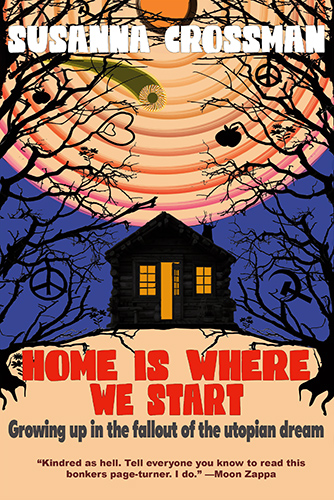
 In the turbulent late seventies, six-year-old Susanna Crossman moved with her mother and siblings from a suburban town to a crumbling mansion deep in the English countryside. They would share their new home with over fifty other residents from all over the world, armed with worn paperbacks on ecology, Marx and radical feminism, drawn together by utopian dreams of remaking the world. They did not leave for fifteen years. Decades later, and armed with hindsight, Crossman revisits her past, turning to leading thinkers in philosophy, sociology and anthropology to examine the society she grew up in, and the many meanings of family and home. In this luminous memoir, she asks what happens to children who are raised as the product of social experiments and explores how growing up estranged from the outside world shapes her as a parent today.
“Vivid and painfully honest…There’s something of a Deborah Levy sensibility here. It’s serious and poetic. It’s delicate and wise. It’s a multilayered excavation, a rich but also careful unfolding of the truth.”
—The Sunday Times
“Fascinating…vivid and poignant details make Home Is Where We Start a powerful memoir of a particularly unusual childhood.” —The Observer
“The book is a brave attempt to come to terms with the fifteen years the author spent from 1978 onwards with her mother, her sister Claire and her unnamed brother in an ‘intentional community’…”
—Salley Vickers, The Spectator
“Part memoir, part critical analysis, a powerful personal account and a cool-headed study of the long-term effects of utopian projects.” —Ann Kennedy Smith, TLS
“This remarkable book vividly resurrects a transformative period in history, offering a child’s perspective on a radical social experiment whose consequences she would carry throughout her life. An extraordinary and thought-provoking read.” —California Review of Books
“Ambitious…Compelling…The diarist’s sense of urgency and the child’s creative use of language have stayed with her, often producing vivid prose.” —Financial Times
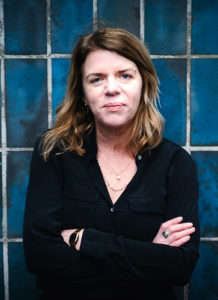 Susanna Crossman grew up in an international utopian community in England during the 1970s and ’80s. Now based in France, she works internationally as a writer, clinical arts therapist, and lecturer, regularly collaborating with artists, academics, and filmmakers. Her recent writing has featured in Aeon, the Paris Review, the Guardian and Vogue. An award-winning fiction writer, her first novel, L’île Sombre, is published in French (La Croisée). Her second novel, The Orange Notebooks, is published with Bluemoose Books (UK) and Assembly Press (North America). She lives with her husband and three daughters. Website: susanna-crossman/squarespace.com
